

Beyond Baroque Gold: The Song of the Living Stone

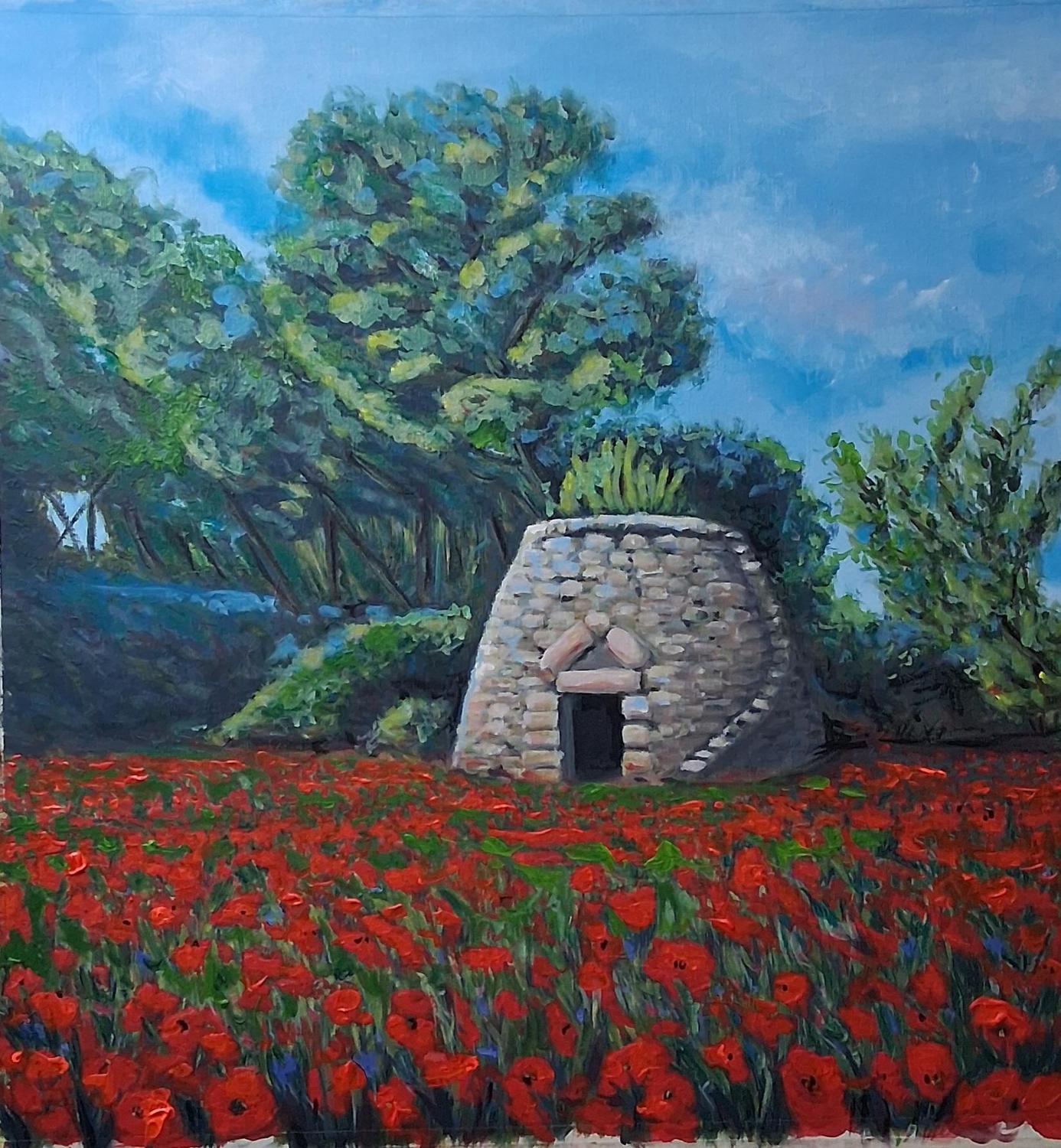
Welcome to the heart of Salento. When one thinks of this land, the mind immediately wanders to the golden embroidery of Lecce’s Baroque churches and the elegance of the Liberty-style palazzos surrounding the historic centers. But there is another beauty, more silent and ancient, made not of decoration but of pure, naked stone: the civilization of the Pagghiare.
The paintings in these rooms are handmade works, born from a sincere passion for this territory and a desire to narrate what words, at times, fail to explain.
A Millennial History (1700 - 1800) : Architecture Without Architects
While dry-stone techniques trace their roots back to Prehistory, it was between the 18th and 19th centuries that the Salento countryside became a vast open-air museum. It is estimated that today there are between 10, 000 and 15, 000 Pagghiare scattered across the region, protected by over 150, 000 kilometers of dry-stone walls—a stone network so vast it could wrap around the Earth nearly four times.
These structures—also known as Pajare, Furnieddhi, Caseddhi, or Scurieddhi—were born of toil and ingenuity. They were cool shelters where the shade held firm against the blinding sun, and time stood still amidst the scent of hay and the song of the cicadas.
A Journey Through Dimensions
As you wander through our lands, you will notice various shapes. These paintings celebrate the essence of rural pagghiare: small, intimate, and isolated, born as essential shelters for daily labor. However, traveling toward the Lower Salento, you will see these stones grow more ambitious, transforming into true multi-room dwellings—many of which have now been reborn as exclusive, charming retreats welcoming travelers from all over the world.
A World Heritage Site (UNESCO)
This millennial wisdom is now protected and mapped in every inch, officially recognized as a UNESCO World Heritage site. It is an "architecture without architects" that defies the centuries through the sheer power of balance and gravity, becoming as much a part of the landscape as the ancient olive trees.
The Artist’s Sentiment
These entirely handmade paintings are not born of color alone, but of a profound sentiment the artist nurtures toward these landscapes. There is a unique thrill in painting these stone sentinels: it is the desire to freeze on canvas that absolute peace, that silent resistance to time, and that warm light that caresses the rock.
Painting these structures is a way to give voice to an emotion beyond words, transforming a bond with the earth into an image that speaks directly to the heart.
We hope that, in observing these works, you too can feel the ancient heartbeat of Salento, and that the beauty of these stones may accompany you as a precious memory of your stay.